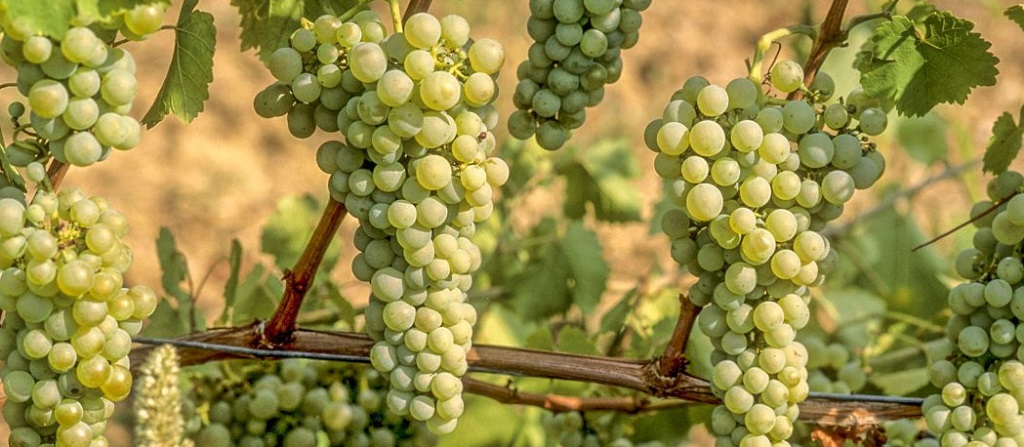
Agiorgitiko is one of Greece’s most important red grape varieties. Native to the Peloponnese, it is known for its deep colour, soft tannins, and juicy red fruit character. Capable of producing everything from fresh rosés to structured, ageworthy reds, Agiorgitiko is the signature grape of Nemea and a cornerstone of modern Greek red wine.
Agiorgitiko has been cultivated in the northeastern Peloponnese for centuries and is strongly associated with the region of Nemea. Its name means “Saint George’s grape,” possibly referring to the town of Agios Georgios, the former name of Nemea. While the exact origins of the variety are unclear, it has long been considered the most important red grape of the area. In ancient times, wines from this region were celebrated for their richness and depth, and Agiorgitiko is thought to be the variety behind many of these historical accounts. During the twentieth century, it was widely planted and often used in simple, rustic blends, but in recent decades producers have begun to focus on low yields, improved viticulture, and site expression, leading to a significant rise in quality.
Agiorgitiko is a genetically distinct variety with no confirmed close relatives, though some researchers believe it may have ancestral links to other Peloponnesian grapes. It is sometimes referred to as Mavro Nemeas, particularly in older texts, but Agiorgitiko is now the standard name across Greek and international wine literature. It is cultivated almost exclusively in Greece, especially in the PDO region of Nemea, though small plantings exist in other areas, including Attica and Macedonia. The grape is used in both varietal wines and blends, and it plays a key role in Greece’s efforts to elevate native red varieties.
Agiorgitiko is a relatively adaptable grape that thrives in a range of altitudes and soil types. It ripens mid to late in the season and is sensitive to yield and site. If overcropped, the wines can become flabby and lack structure, but with careful canopy and yield management, the grape can produce concentrated fruit with balanced acidity and tannin. In Nemea, vineyards range from valley floors to elevations above 800 metres, with higher altitude sites producing fresher, more aromatic wines. The grape is moderately disease resistant but can be susceptible to botrytis in humid conditions near harvest.
Agiorgitiko is highly versatile in the cellar. For lighter styles and rosés, winemakers use short maceration and cool fermentation to preserve red fruit and floral notes. For structured reds, longer maceration, oak ageing, and malolactic fermentation are common. The grape’s soft tannins and round texture respond well to both neutral and new oak, depending on the desired style. In some cases, amphora or concrete vats are used to emphasise purity and freshness. The best examples are built on fruit depth and balance rather than power, though top cuvées from old vines or single vineyards can age for a decade or more.
Agiorgitiko produces a wide range of wine styles. Entry level wines are juicy and soft, with notes of strawberry, cherry, and sweet spice. Mid range wines show darker fruit, round tannins, and more pronounced structure. Premium bottlings from higher elevation vineyards or older vines can display blackberry, plum, black pepper, and earthy undertones, along with greater concentration and length. Acidity is moderate, and tannins are typically fine and polished. The grape’s natural softness makes it appealing both as a varietal and in blends, often with international varieties such as Cabernet Sauvignon.
Agiorgitiko is at the centre of Greece’s push to define high quality, regionally expressive red wines. Producers in Nemea are increasingly focusing on site selection, vine age, and low intervention winemaking to bring out the grape’s full potential. There is also growing interest in alternative styles, including natural, skin contact, and low sulphur wines. Outside of Nemea, the grape is being explored in cooler climates and blended with other native varieties. Among international audiences, Agiorgitiko is gaining recognition for its approachability, food friendliness, and Mediterranean character.
Gaia’s “Agiorgitiko by Gaia” offers a fresh, fruit driven introduction to the grape, while their “Gaia Estate” bottling shows the depth and ageing potential of old vine Nemea. Skouras produces several excellent examples, from the elegant “Saint George” to the structured “Grand Cuvée.” Tselepos crafts refined and balanced Agiorgitiko with lifted aromatics and spice, and Papaioannou is known for powerful, earthy interpretations from old vines. Seméli and Palivou also offer consistently strong examples across price points. These wines reflect Agiorgitiko’s full stylistic range and its role as a pillar of Greek red winemaking.