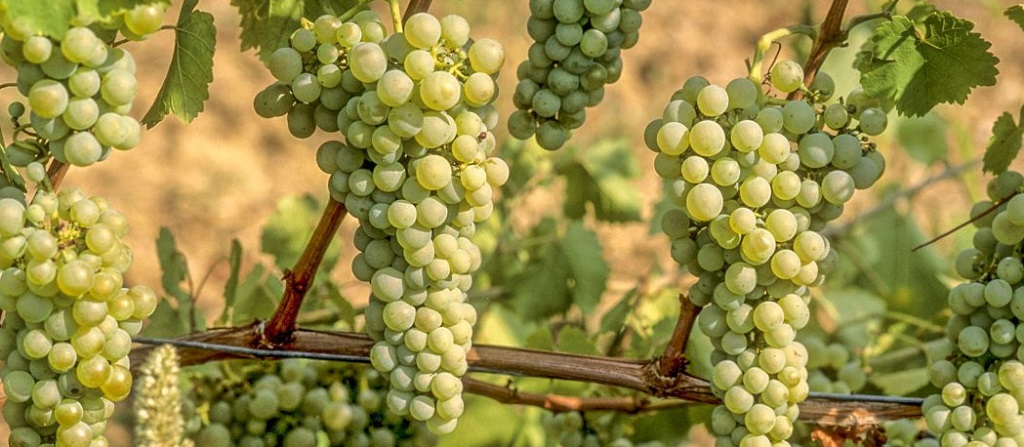
Antão Vaz is a heat tolerant white grape native to southern Portugal, most closely associated with the Alentejo region. It produces full bodied, richly textured wines with moderate acidity and ripe tropical fruit character. Often used in blends, it is also increasingly bottled as a varietal and valued for its adaptability to warm climates.
Antão Vaz likely originated in Vidigueira, a subregion of Alentejo, where it has been cultivated for generations. The grape was traditionally blended with local varieties to make full bodied white wines suited to the region’s hot dry conditions. In the late twentieth century, as interest in regional identity and native grapes grew, Antão Vaz was rediscovered for its resilience in the vineyard and potential for quality winemaking. It is now considered the signature white grape of Alentejo and plays an important role in the region’s growing reputation for white wine, which continues to evolve alongside technological improvements and climate conscious viticulture.
Antão Vaz is a genetically distinct Portuguese variety with no confirmed close relatives, though it may share ancestry with other southern Portuguese grapes. It is grown almost exclusively in Alentejo, particularly in Vidigueira, Évora, and Reguengos, where it is authorised in local blends and monovarietal wines. It has no widely accepted synonyms and is almost always labelled under its original name. Its rise in popularity is closely tied to the promotion of regional identity in Alentejo and the broader revival of native Portuguese varieties.
Antão Vaz is highly adapted to hot dry climates and poor soils. It is drought resistant, late ripening, and produces generous yields with proper canopy management. The vine is vigorous and tends to produce large berries with thick skins, which help protect against sunburn and dehydration. It performs best in well drained schist or granite based soils and benefits from cool nights that help preserve acidity. While naturally low in acid in some sites, careful harvest timing and site selection can maintain freshness and balance. Its reliable performance and flexibility make it a preferred choice for growers across the Alentejo.
Antão Vaz can be vinified in a variety of ways depending on the intended style. Fresh expressions are fermented in stainless steel at low temperatures to preserve tropical fruit, citrus, and floral aromas. For richer wines, it is fermented and aged in oak barrels with lees stirring to build texture and complexity. Some producers use amphora or concrete to enhance mouthfeel without adding overt oak character. Malolactic fermentation is rare but sometimes used in barrel aged styles. The grape’s broad aromatic range and moderate acidity allow it to anchor blends or stand alone as a full bodied, structured white.
Antão Vaz produces dry white wines that are full bodied, with moderate acidity, elevated alcohol, and flavours of ripe melon, peach, mango, lemon peel, and orange blossom. In barrel aged styles, notes of toast, vanilla, and spice emerge. The wines can be plush and rounded or, with careful vinification, more focused and mineral. While not typically long lived, higher quality examples can evolve over five to seven years, developing nutty and honeyed complexity. The best expressions show a balance of weight and freshness, making them well suited to modern Mediterranean cuisine and warmer climates.
As Alentejo adapts to climate change and rising temperatures, Antão Vaz is increasingly seen as a reliable variety for producing quality white wines under extreme conditions. Producers are exploring cooler microclimates and earlier harvests to retain acidity, while also experimenting with amphora, lees ageing, and natural fermentation to broaden stylistic diversity. The grape is now often featured in monovarietal bottlings that highlight its richness and regional character. It also continues to serve as the backbone of many Alentejo blends, paired with varieties such as Arinto, Roupeiro, or Verdelho. Its adaptability ensures that it will remain a key part of Portugal’s white wine future.
In Vidigueira, Herdade do Rocim and Herdade da Lisboa produce textured, mineral driven Antão Vaz that capture both ripeness and restraint. Cartuxa and Adega da Cartuxa in Évora craft barrel aged versions with layered tropical fruit and subtle oak. Fitapreta Vinhos offers fresher interpretations from cooler sites that emphasise acidity and citrus clarity. Monte da Ravasqueira produces structured and balanced styles that showcase the grape’s versatility. These producers reflect the full range of Antão Vaz and its growing role in expressing Alentejo’s evolving white wine identity.