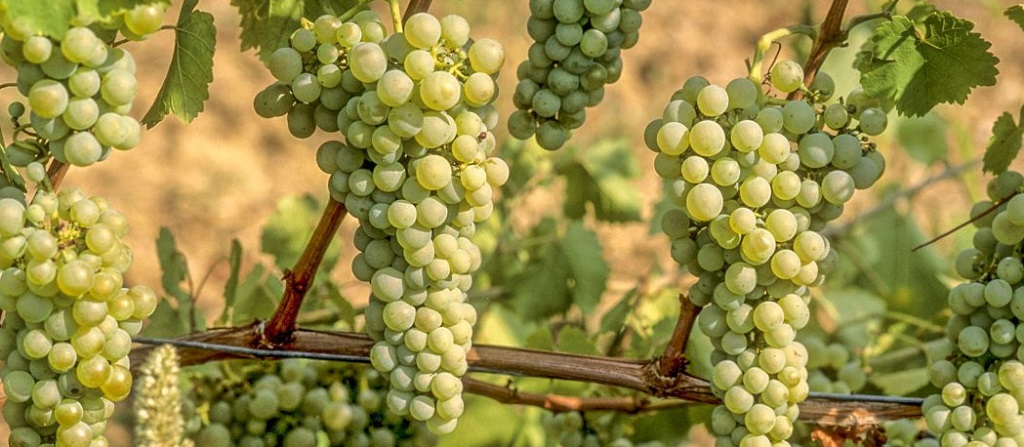
Mavrotragano is a rare red grape variety native to the island of Santorini in Greece. Once nearly extinct, it has been revived by a small number of producers who recognised its potential to produce deeply coloured, ageworthy wines with dark fruit character and firm structure. It is now one of the most distinctive red varieties of the Aegean.
Mavrotragano has long been part of Santorini’s viticultural history, though it was traditionally used in small quantities for sweet wines rather than for dry reds. Its name means “black crunchy,” referring to its thick skins and firm berries. By the late twentieth century, the variety was nearly lost, with only a few vines remaining on the island. It was saved from obscurity through the efforts of visionary winemakers such as Haridimos Hatzidakis and Paris Sigalas, who recognised the grape’s quality and began replanting it for dry red wine production. Its revival marks one of the most successful stories of heritage preservation in Greek viticulture.
Mavrotragano is genetically distinct and has no known synonyms in commercial use. DNA analysis confirms it as an indigenous Greek variety with no close relation to international grapes. The name is consistently spelled Mavrotragano across modern Greek wine literature, though sometimes separated into two words as Mavro Tragano. There is no white or pink variant, and it is not known to be widely planted outside Santorini, though small experimental plots now exist on the Greek mainland.
Mavrotragano is a low yielding variety with small berries and thick skins. It ripens relatively early and is well adapted to the dry, volcanic soils of Santorini. The vines are typically trained low to the ground in traditional basket shapes to protect against the island’s strong winds. The variety requires careful vineyard management to achieve even ripening and avoid overly firm tannins. Its natural concentration and resistance to drought make it suitable for low input viticulture, but it demands attention and skill from the grower to reach its full potential.
In the cellar, Mavrotragano benefits from careful extraction to manage its robust tannins and preserve its aromatic intensity. Fermentation in stainless steel followed by ageing in neutral or lightly toasted oak is common, allowing the fruit to shine while building structure. Some producers use amphora or large old barrels to enhance mouthfeel without adding overt oak character. Ageing potential is significant, and the best examples can mature gracefully over ten years or more. Mavrotragano is rarely blended, though in some cases it may be softened with a small amount of Mandilaria or another local variety.
Mavrotragano produces dry red wines that are full bodied and intensely coloured, with firm tannins and concentrated fruit. Aromas often include black cherry, plum, dried herbs, licorice, and crushed volcanic rock. The wines can be powerful in youth but tend to develop savoury complexity with age. On the palate, they show grip, freshness, and mineral tension, reflecting the island’s soils and climate. Alcohol levels are moderate to high, and the style leans more towards seriousness than charm. A few experimental sweet wines made from sun dried Mavrotragano still exist, echoing its historical use, but most production today is dry.
Mavrotragano has become a symbol of Santorini’s potential for high quality red wine production. As plantings increase and more winemakers work with the variety, its reputation continues to grow both within Greece and internationally. It is now featured in fine wine programs and specialist portfolios, particularly those focused on volcanic terroirs. While still rare, it is one of the most exciting red grapes in modern Greek wine, offering a compelling alternative to better known Mediterranean reds.
Hatzidakis was one of the first producers to showcase the potential of Mavrotragano, and his bottlings remain among the finest, combining wild berry fruit with herbal depth and volcanic grip. Domaine Sigalas also makes a polished and ageworthy example with firm structure and long finish. Argyros and Gaia are newer entrants producing concentrated and stylish interpretations with precise winemaking. Outside of Santorini, some mainland producers are beginning to experiment with Mavrotragano in cooler sites, but the most profound examples still come from the island’s windswept vineyards and ancient soils.