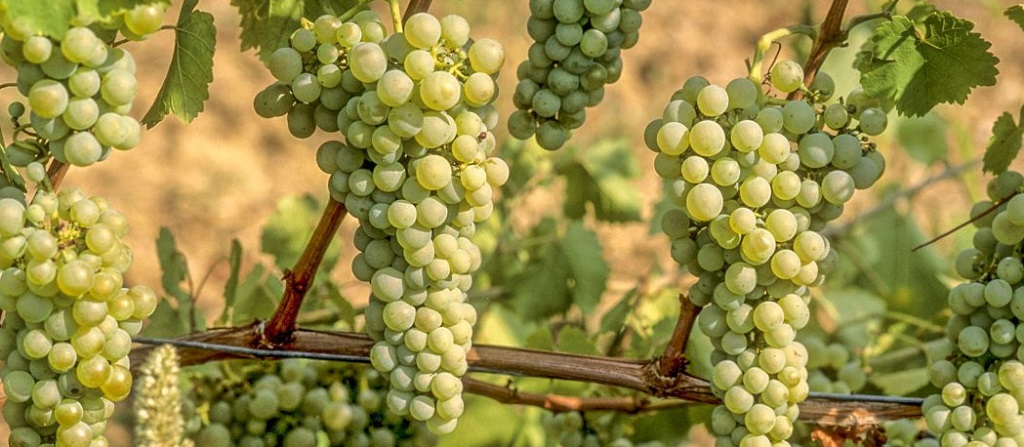
Mencia is a dark skinned red grape native to northwestern Spain, particularly the regions of Bierzo, Ribeira Sacra, and Valdeorras. It produces fragrant, medium bodied wines with fresh red fruit, floral notes, and a mineral edge, often drawing comparisons to Pinot Noir or Cabernet Franc for its aromatic lift and finesse.
Mencia has been grown for centuries in Galicia and Castilla y León, with records of its cultivation in Bierzo dating back to the Middle Ages. It was historically used to make light, rustic table wines, often from high yielding vines on fertile valley floors. During the twentieth century, this led to a decline in quality and a perception of Mencia as a simple, unremarkable grape. In the 1990s, a new generation of producers began exploring old vine parcels on slate and schist soils in higher elevation sites. Their efforts revealed Mencia's potential for freshness, terroir expression, and elegance. Today, it is considered one of Spain’s most exciting native red grapes.
DNA testing confirms that Mencia is a distinct Iberian variety, though it is genetically related to Jaen do Dão, a grape grown in northern Portugal. The two are considered the same variety under different names, but expressions differ due to regional viticulture and winemaking. Mencia has no relation to Cabernet Franc, despite earlier speculation based on aromatic similarities. It is almost exclusively grown in Spain and Portugal, though a small number of experimental plantings exist elsewhere. The name Mencia is consistently used on Spanish labels, and there are no widely used synonyms beyond its Portuguese counterpart.
Mencia is an early budding and early ripening grape that performs best in moderate to cool climates. It thrives in the slate and granite soils of northwestern Spain, especially on steep terraced vineyards in Ribeira Sacra and the rolling hills of Bierzo. The vine is moderately vigorous and can be highly productive if not carefully managed. When overcropped, it produces dilute wines with low character. In well drained, low fertility soils and older bush vines, it yields concentrated fruit with aromatic complexity. Its thin skins make it prone to rot in humid conditions, so good airflow and canopy control are important.
Mencia is versatile in the cellar and can be made in a range of styles. Lighter wines are often fermented in stainless steel or concrete with minimal extraction to preserve fruit and freshness. More serious examples undergo longer maceration, sometimes with whole bunch inclusion, and are aged in neutral or lightly toasted oak. French oak barrels and large foudres are commonly used to add texture without overpowering the grape’s aromatics. Malolactic fermentation is standard, and low intervention techniques such as native yeast fermentation and low sulphur use are increasingly common. The goal is typically to highlight the grape’s perfume and site specific character.
Mencia produces dry red wines that range from light and juicy to structured and ageworthy. The wines are typically medium bodied, with moderate alcohol, high acidity, and fine grained tannins. Aromas often include sour cherry, redcurrant, pomegranate, violet, and crushed stone. With age or oak ageing, notes of smoke, leather, and spice can develop. At its best, Mencia combines fruit purity with mineral precision, offering a distinctive expression of Atlantic influenced mountain viticulture. While some styles are meant for early drinking, top examples from old vines and complex soils can evolve for a decade or more.
Mencia has become a focal point of Spain’s new wave of wine, appealing to consumers and sommeliers seeking lighter reds with freshness and origin. In Bierzo, producers are exploring single vineyard bottlings and highlighting differences in soil, elevation, and vine age. In Ribeira Sacra, steep vineyards and traditional methods yield wines of finesse and precision. Winemakers are increasingly using indigenous yeasts, minimal oak, and low sulphur to express purity of fruit and place. Outside Spain, Portuguese growers are reassessing Jaen do Dão with renewed interest, aiming to produce fresher, more terroir driven wines that align with the Mencia revival.
In Bierzo, Raúl Pérez and Descendientes de J Palacios lead the way with site driven, ageworthy Mencia from old vines and varied soils. In Ribeira Sacra, Guímaro and Dominio do Bibei craft elegant, mineral wines with floral lift and tension. Luna Beberide and Pittacum offer fuller bodied but balanced styles that reflect Bierzo’s range. In Portugal, Quinta dos Roques and Quinta da Pellada are reinterpreting Jaen with an eye to structure and finesse. These producers reflect the diversity and growing stature of Mencia as one of the most exciting red grapes of the Iberian Peninsula.