Ribolla Gialla is a white grape variety native to the borderlands of Friuli Venezia Giulia and western Slovenia. Known for its high acidity, subtle citrus aromas, and adaptability to both classic and extended skin contact winemaking, it produces wines that range from light and mineral to deep, textural, and ageworthy. It is one of the oldest and most culturally significant grapes in the northeast of Italy.
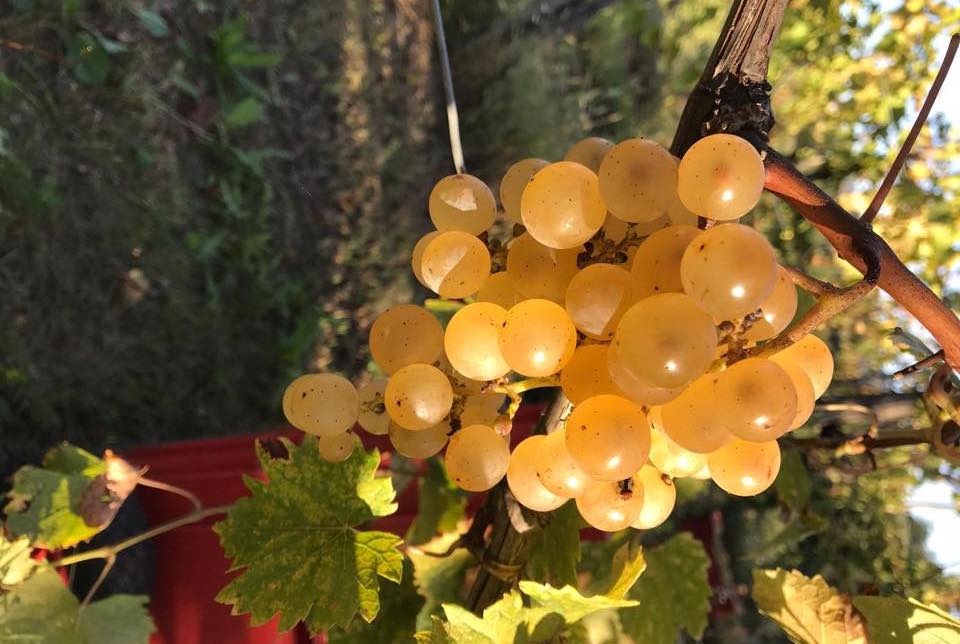
Ribolla Gialla has been cultivated in Friuli Venezia Giulia since at least the thirteenth century. Historical records show its presence in the hills around Gorizia and Collio, where it was highly prized by the Venetian Republic and other ruling powers for its freshness and elegance. In the twentieth century, like many local grapes, Ribolla Gialla fell into decline as international varieties became fashionable and local traditions were disrupted by war and economic shifts. Its revival began in the 1990s with the rise of the natural wine movement and a renewed focus on Friuli’s indigenous varieties. Today, it stands as a cornerstone of both conventional and skin contact winemaking in the region.
Ribolla Gialla is genetically distinct and unrelated to similarly named grapes such as Ribolla Verde or Schioppettino, which is sometimes called Ribolla Nera. The grape is native to Friuli Venezia Giulia, particularly the Collio, Colli Orientali del Friuli, and Carso areas, and is also grown across the border in Brda, Slovenia, where it is known as Rebula. While previously confused with other regional grapes, DNA analysis has confirmed Ribolla Gialla’s unique identity and ancient lineage. Despite limited plantings elsewhere, it has gained some traction among natural wine producers in Austria, Australia, and the United States.
Ribolla Gialla is a late ripening variety that performs best in hillside vineyards with marl and sandstone soils. It is moderately vigorous, with good resistance to fungal disease and drought. The grape naturally retains high levels of acidity, even in warm years, and can yield generously unless managed carefully. Its thick skins make it well suited to extended skin contact and oxidative ageing styles. When yields are controlled and picked at optimal ripeness, it produces grapes with balanced sugar and acidity, ideal for both fresh and complex interpretations.
Ribolla Gialla is one of the most versatile white grapes in Italy. In conventional winemaking, it is fermented in stainless steel or concrete to produce light, fresh wines with citrus and mineral notes. For more structured styles, some producers age the wine on lees or in large neutral barrels. In skin contact or orange wine approaches, the grape responds well to long maceration, often lasting weeks or months, and ageing in amphora or old wood. These versions develop tannic grip, deep colour, and complex aromas of dried apricot, tea leaf, and earth. Ribolla’s naturally high acidity provides structure across all styles.
Ribolla Gialla produces dry white wines that range from crisp and delicate to bold and textured. Classic stainless steel examples show lemon zest, green apple, white flowers, and saline minerality, with a clean, linear finish. Skin contact versions are amber hued, with notes of dried citrus peel, wild herbs, spice, and a firm, tannic frame. Both styles maintain bright acidity and moderate alcohol, with the best examples capable of ageing gracefully for ten years or more. Ribolla is rarely aromatic but often expressive in texture and structure, making it a wine more about sensation than scent.
Ribolla Gialla is at the forefront of the natural and skin contact wine movements in Italy and Slovenia. Producers such as Gravner and Radikon have redefined its potential through amphora and long maceration, positioning it as a flagship grape of the orange wine revival. At the same time, quality focused conventional producers are refining its classic expression, making it accessible to a broader audience. Ribolla is increasingly valued for its regional authenticity, textural complexity, and food pairing versatility. While still relatively niche internationally, it plays a leading role in Friuli’s white wine renaissance.
Gravner and Radikon offer the most influential and ageworthy skin contact Ribolla Gialla, with powerful structure, oxidative complexity, and deep texture. La Castellada, Damijan Podversic, and Dario Princic produce nuanced interpretations that balance wildness with precision. For fresher expressions, I Clivi and Zorzettig craft mineral, linear wines with clarity and poise. Across the border in Slovenia, Movia and Edi Simčič produce both traditional and orange styles of Rebula, highlighting the grape’s transnational character. These wines capture the full stylistic spectrum of Ribolla Gialla, from ethereal to profound.