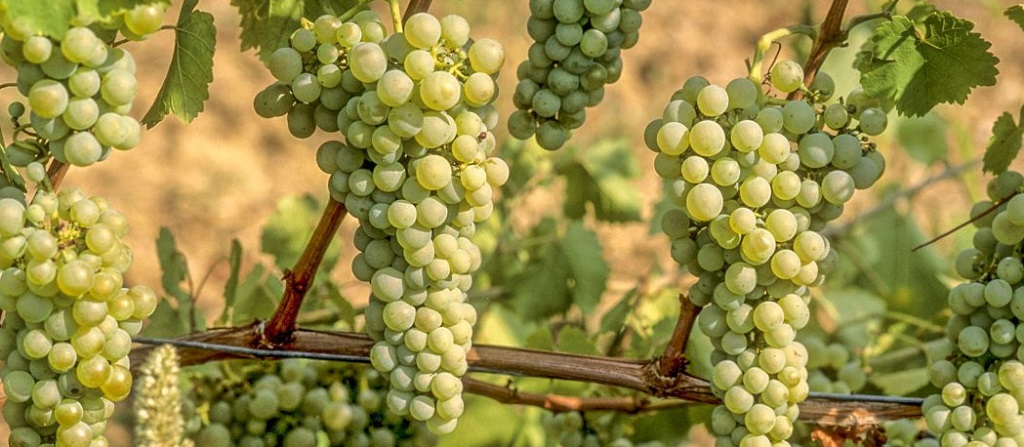
Riesling Italico is a white grape variety historically cultivated in central and eastern Europe. Despite its name, it is not closely related to the famous Riesling of Germany. Known for its fresh, easy drinking style and moderate aromatic character, it has long been used for everyday wines and local blends across countries such as Italy, Hungary, Croatia, Slovenia, and Romania.
The origins of Riesling Italico are unclear, though it is widely believed to have originated in the Danube basin, possibly in what is now Slovenia or northeastern Italy. It was widely planted in the Austro Hungarian Empire, spreading through Hungary, Croatia, Romania, and Austria, where it became a staple of local white wine production. It is thought to have been introduced to northern Italy in the nineteenth century, where it was named “Riesling Italico” to distinguish it from Riesling Renano (true Riesling). Its adaptability and productivity made it popular throughout the twentieth century, though in recent decades, its reputation has waned in favour of more aromatic or structured varieties.
DNA profiling has confirmed that Riesling Italico is not related to German Riesling. It is a completely distinct variety, though the similarity in name has led to frequent confusion. It is known by different names in various regions, notably Welschriesling in Austria and Germany.
Riesling Italico is a productive, early to mid ripening variety that grows well in a range of climates. It prefers cooler zones and performs best in loamy, calcareous, or gravelly soils. The vine is moderately vigorous and generally reliable, making it attractive to growers focused on volume and consistency. It is susceptible to botrytis and downy mildew, though in controlled quantities, botrytis can enhance late harvest styles. Its naturally high acidity and neutral flavour profile make it adaptable for sparkling base wines or light still whites. However, careful yield management is essential to avoid blandness or imbalance.
Most Riesling Italico is fermented in stainless steel to preserve freshness and highlight its crisp acidity. It is usually produced as a dry or off dry wine for early drinking. In cooler climates or traditional regions, it may be used for late harvest or botrytised wines, which benefit from its acidity and moderate sugar accumulation. Sparkling wine production is common in Hungary and Slovenia, where it forms the base of méthode traditionnelle cuvées. Oak ageing is rare, though lees contact may be used to add roundness. It is often blended with more aromatic or structured grapes to increase complexity.
Riesling Italico produces dry white wines that are light to medium bodied, with moderate alcohol and high acidity. Aromas typically include green apple, lemon, hay, white flowers, and almond. The palate is crisp and refreshing, often with a slightly bitter or nutty finish. Late harvest and botrytised styles show richer notes of honey, orange peel, and dried apricot. In sparkling wines, it contributes acidity and neutral fruit, allowing the method of production and terroir to shape the wine’s character. Riesling Italico is often a simple wine intended for youthful consumption.
Riesling Italico has seen declining plantings in much of western Europe but remains widely grown in Hungary, Slovenia, and parts of Croatia and Austria, where it still plays a role in both traditional and modern wines. Some producers are exploring higher quality, single vineyard bottlings and natural expressions, while others focus on late harvest and sparkling styles. In Italy, it remains a minor component in Lombardy and Oltrepò Pavese, often used in sparkling blends. As wine markets shift toward authenticity and regional identity, Riesling Italico is being reappraised for its role in central European wine heritage.
Kristinus and Tornai in Hungary produce both dry and sweet versions of Olaszrizling that highlight regional terroir. Movia and Prus in Slovenia offer textural, sometimes skin contact styles under the name Laški Rizling. Pittaro and Conte Vistarino in Italy’s Oltrepò Pavese craft light, refreshing Riesling Italico wines ideal for aperitif or sparkling use. In Austria, Weingut Hajszan Neumann and Weingut Loimer bottle serious expressions of Welschriesling, showing its potential when treated with care.