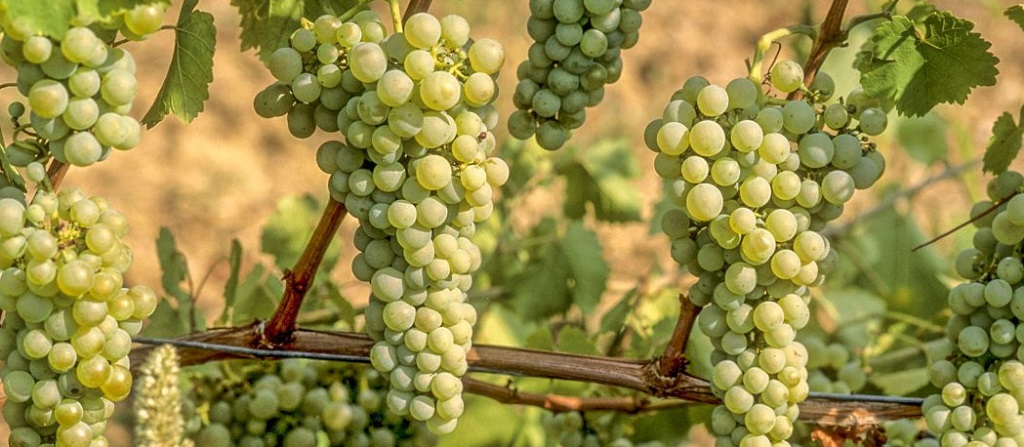
Roupeiro is a traditional white grape variety from southern Portugal, known for producing aromatic wines with soft texture, moderate acidity, and notes of citrus, stone fruit, and herbs. Widely planted in Alentejo and Douro, it is valued for its early ripening and blending versatility, often appearing in regional white blends.
Roupeiro has been grown in Alentejo, Douro, and Beira Interior for centuries. Its historic role has been largely functional, contributing body and fragrance to local white wines in a variety of styles. In Alentejo, it became one of the most widely planted white varieties, particularly in the mid to late twentieth century, as producers favoured high yielding, heat tolerant grapes. Despite its wide use, it was often overshadowed by more prominent varieties and rarely bottled on its own. In recent years, however, interest in regional white wines has led to more thoughtful work with Roupeiro, both as a solo grape and in quality blends.
Roupeiro is the same variety as Síria in Beira Interior and Côdega in parts of the Douro. Though these names reflect different regional traditions and styles, DNA analysis confirms they refer to the same grape. In Alentejo, Roupeiro remains the dominant name and is most often used in blends alongside Antão Vaz, Arinto, and other local whites. It is genetically distinct from other major Iberian white varieties and is not related to international grapes. The different naming conventions often reflect stylistic differences more than clonal or genetic variation.
Roupeiro is early budding and early ripening, making it well suited to warm inland regions with short growing seasons. It is productive and easy to manage in the vineyard, with good resistance to drought but some sensitivity to fungal disease in wetter years. The vine produces medium to large bunches and tends to accumulate sugar quickly, which can lead to high alcohol and lower acidity if not harvested at the right time. Careful site selection and yield control are essential for quality. It is best grown in cooler microclimates or at altitude, where freshness and aromatic lift can be preserved.
Roupeiro is usually fermented in stainless steel at low temperatures to retain its aromatic profile. It can also be blended with more structured varieties to provide roundness and floral lift. While less common, some winemakers experiment with partial barrel ageing or extended lees contact to build texture and depth. In the Douro, under the name Côdega, it sometimes appears in oxidative or aged white styles, particularly in old vine field blends. In modern Alentejo production, the focus is typically on freshness, citrus character, and early release. Malolactic fermentation is rarely used, as the grape tends toward softness in acid structure.
Roupeiro produces dry white wines that are light to medium bodied, with moderate acidity and aromatic notes of orange blossom, apricot, lemon peel, and wild herbs. In warmer areas, tropical fruit and honeyed tones can develop, while cooler sites produce more restrained and citrus driven profiles. The wines are generally intended for early drinking and pair well with local dishes, though some structured blends can age for several years. As a varietal, it tends to show a soft, accessible texture and expressive aromatics rather than overt complexity or longevity.
Roupeiro is experiencing a modest revival as part of broader efforts to elevate Portugal’s native white varieties. In Alentejo, it continues to serve as a useful blending grape, but producers are working with older vines and lower yields to improve concentration and character. In Beira Interior, under the name Síria, the grape is appearing in fresher, high altitude expressions with more mineral tension. Some natural and low intervention winemakers are experimenting with Roupeiro in amphora and skin contact styles, exploring its adaptability. While still mostly used in blends, its regional identity and aromatic appeal are being rediscovered.
In Alentejo, Adega Mayor and Herdade das Servas craft fresh Roupeiro based whites that highlight citrus and floral lift. Herdade do Rocim blends Roupeiro with Antão Vaz and Arinto to create balanced, textural wines with regional character. In Beira Interior, Quinta dos Termos offers mineral driven Síria from high altitude sites. CARM and Lavradores de Feitoria in the Douro include Côdega in field blend whites that reflect the grape’s historic role and blending value.