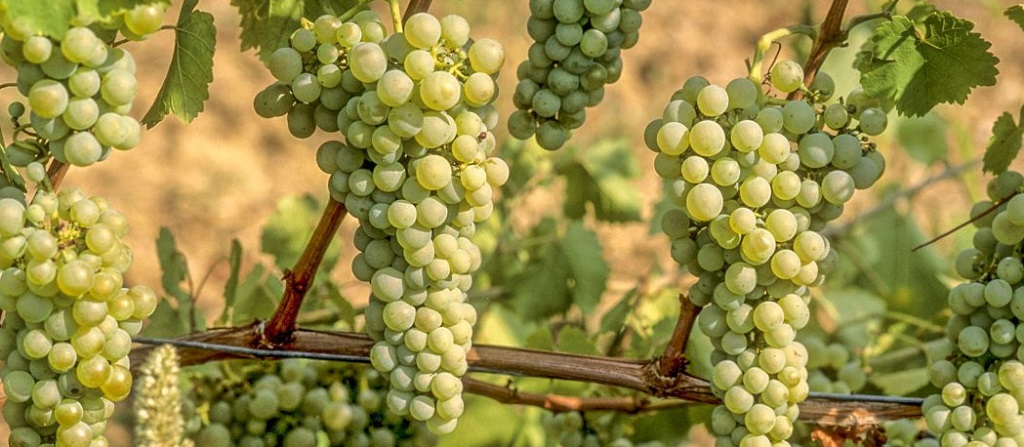
Savatiano is one of Greece’s most widely planted white grape varieties, traditionally associated with the production of Retsina. Long undervalued, it is now being reappraised for its ability to produce textured, balanced wines with citrus, herbal, and nutty notes. When grown at low yields and handled carefully in the cellar, Savatiano reveals depth, structure, and surprising ageing potential.
Savatiano has a long history in central Greece, particularly in Attica, where it has been cultivated for centuries. Its drought tolerance made it an ideal choice for the dry, sunbaked plains around Athens. Historically, it was used to make Retsina, a traditional Greek wine flavoured with pine resin, which became the dominant style of Greek white wine during the twentieth century. As a result, Savatiano developed a reputation as a workhorse grape rather than one of distinction. In recent decades, however, a small group of producers began exploring lower yields, later harvests, and more refined winemaking, leading to a renaissance of interest in the variety.
Savatiano is a distinct Greek variety with no confirmed close genetic relationships to other major grapes. DNA testing shows that it is not related to Roditis, though the two are sometimes blended. It is sometimes referred to locally as Kountoura Lefki or Doumato, but these names are rarely used in commercial contexts. It is almost entirely planted in Greece, especially in the regions of Attica, Viotia, and Evia, with only limited presence abroad. The name is consistently spelled Savatiano in modern usage.
Savatiano is well adapted to the hot, dry climate of central Greece. It is drought resistant, productive, and capable of maintaining acidity when grown at altitude or harvested early. It ripens mid to late in the season and benefits from low intervention viticulture. While it can be prone to mildew in humid conditions, it performs reliably in the dry plains of Attica. To achieve high quality, yields must be carefully controlled, and harvesting must be timed to preserve balance between sugar and acidity. Old bush vines grown on poor soils produce the most characterful wines.
Savatiano responds well to a range of winemaking approaches. Stainless steel fermentation highlights its citrus and herbal freshness, while barrel fermentation or ageing on lees can enhance texture and depth. Some producers use skin contact or amphora to create more layered and savoury styles. It also forms the base of traditional Retsina, where resin is added during fermentation. In recent years, natural and low intervention winemakers have embraced Savatiano for its resilience, moderate alcohol, and ability to reflect site. When handled with care, it can age for several years and gain complexity.
Savatiano produces medium bodied white wines with moderate acidity and subtle aromas of lemon peel, green apple, chamomile, toasted almond, and dried herbs. The best examples show a creamy texture and a mineral edge, often with a slightly oxidative character that adds complexity. Unoaked styles are clean and fresh, while barrel aged wines reveal richness and depth. Retsina made from Savatiano remains an important style, particularly when produced with finesse and balance. While not overtly aromatic, the grape expresses a quiet, textural sophistication when grown in the right conditions.
Savatiano is at the heart of Greece’s effort to revalue traditional grapes once dismissed as rustic or industrial. A new generation of producers is reviving old vineyards, working with low yields, and applying modern techniques to highlight the grape’s potential. Interest in terroir driven Retsina is also growing, led by natural winemakers who see the style as a legitimate expression of Greek heritage. Savatiano’s moderate alcohol, drought tolerance, and flexibility make it increasingly attractive in the context of climate change and evolving consumer preferences.
Papagiannakos has led the way in elevating Savatiano, producing clean, ageworthy wines from old bush vines in Attica that show clarity, structure, and freshness. Mylonas crafts both traditional and experimental styles, including skin contact and amphora aged bottlings that bring out the grape’s earthy depth. Markou and Gikas also produce thoughtful interpretations that balance freshness with gentle complexity. For serious Retsina, look to Tetramythos, whose wild fermented version demonstrates that resinous wines can be refined and gastronomic. These producers reflect a growing movement to rediscover Savatiano as a grape of quiet confidence and lasting character.