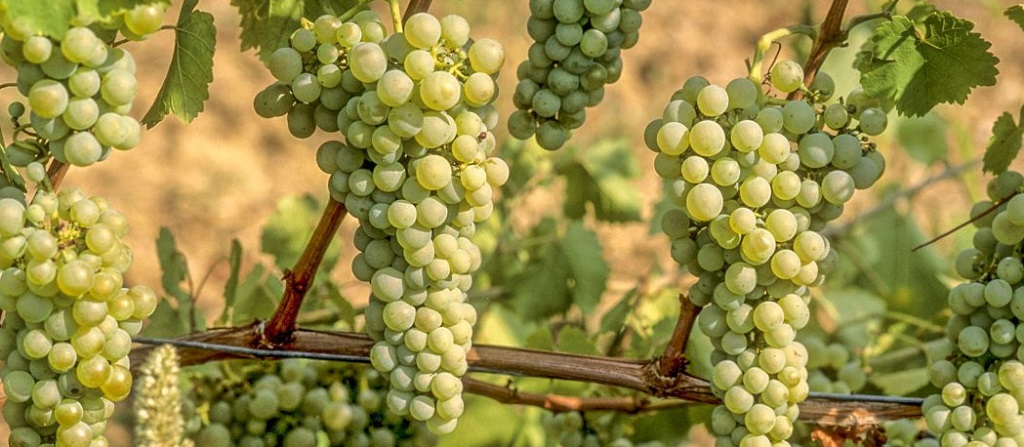
Touriga Nacional is one of Portugal’s most important and noble red grape varieties. Known for its deep colour, powerful tannins, and intense aromas of dark fruit and floral notes, it is the backbone of many top-quality dry reds and the foundation of the country’s finest Port wines. It is widely regarded as Portugal’s flagship grape.
Touriga Nacional has long been cultivated in northern Portugal, particularly in the Douro Valley and Dão regions. It was historically used in Port blends for its colour, structure, and aromatic intensity, often in small proportions due to low yields. In the Dão, it was traditionally trained in high pergolas and co-planted with other varieties in field blends. The grape’s reputation grew steadily in the late twentieth century, as producers began to bottle varietal Touriga Nacional wines and improve clonal material. Today, it is considered one of Portugal’s most prized native varieties and plays a central role in the country’s wine identity.
Touriga Nacional is genetically distinct, although it is related to several other Iberian varieties. DNA testing suggests that it may be a parent of Touriga Franca, another key Douro grape. It has no major synonyms in Portugal, though it is occasionally labelled simply as Touriga in blended wines. In France, it is authorised under the name Touriga Nacional in some experimental plantings. The grape is widely grown in Douro, Dão, Bairrada, and Lisboa, and is increasingly planted in Alentejo. It is also gaining traction abroad, particularly in Australia, South Africa, and California, where producers admire its depth and structure.
Touriga Nacional is a low yielding variety that produces small berries and thick skins, resulting in highly concentrated wines. It thrives in poor, rocky soils such as schist and granite, and is well suited to the steep, terraced vineyards of the Douro Valley. It is resistant to drought but sensitive to excessive moisture, which can cause disease pressure. Despite its low yields, it ripens relatively early and maintains good acidity even in warm climates. Clonal selection has helped reduce the extreme variability once associated with the grape, allowing for more balanced and manageable vineyards.
Touriga Nacional is prized for its ability to produce structured, deeply coloured wines with aromatic complexity. In both Port and dry red wine production, it responds well to temperature controlled fermentation and gentle extraction to preserve fruit and floral character. Ageing in French oak, both new and used, is common for top dry reds, where it adds finesse and spice. The grape also performs well in lagares, where foot treading allows even extraction during Port vinification. In blends, it lends structure and aromatic lift, while as a varietal wine, it delivers depth, tannin, and potential for long ageing.
Touriga Nacional produces full bodied, dark red wines with high tannins, fresh acidity, and intense aromatics. Common flavours include blackberry, blueberry, plum, violet, bergamot, and dark chocolate. Young wines are bold and assertive, with structure and drive, while aged versions reveal notes of leather, dried herbs, and smoky minerality. In Port wines, Touriga Nacional adds colour, power, and floral elegance. As a dry red, it can stand alone or form the backbone of complex blends. Across styles, the wines are typically built to age and improve over time.
Touriga Nacional has become Portugal’s flagship grape in the global wine market. Its suitability to both fortified and dry wine styles, adaptability to warm climates, and strong identity have made it attractive to a wide range of producers. In the Douro, it remains central to both traditional Port and the region’s growing portfolio of premium dry reds. In Dão and Bairrada, it is being used in more elegant, restrained interpretations. Abroad, it is increasingly valued in dry red blends, particularly in New World regions exploring Mediterranean and Iberian varietals. Clonal work and precision viticulture are helping fine tune its potential.
In the Douro, Quinta do Crasto and Niepoort produce varietal Touriga Nacional wines of depth and finesse, while Quinta do Vallado and Quinta da Leda craft structured blends that highlight its aromatic power. In the Dão, Alvaro Castro and Quinta dos Roques offer more lifted, floral expressions with freshness and minerality. In Bairrada, Filipa Pato uses it in both classic and contemporary blends. Top Port houses such as Graham’s, Taylor’s, and Fonseca rely on Touriga Nacional for power and ageing potential. These wines reflect the grape’s versatility and enduring importance in Portuguese viticulture.