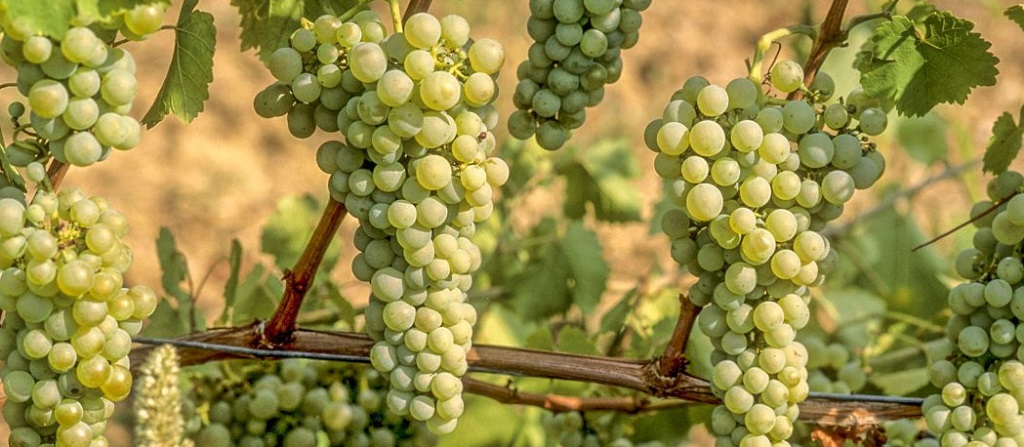
Vidiano is an emerging white grape variety from the island of Crete. Once nearly forgotten, it has become one of the most promising native Greek grapes, capable of producing complex, textured wines with stone fruit aromas, herbal lift, and fresh acidity. It is increasingly seen as Crete’s flagship white variety.
Vidiano was historically grown on Crete but saw a sharp decline in plantings during the twentieth century. Its fall into obscurity was due to low yields, changing farming practices, and the grape’s relative fragility in the vineyard. By the 1980s, it was on the verge of extinction. A small group of Cretan producers recognised its potential and began a patient process of rediscovery and replanting. Thanks to their efforts, Vidiano has returned to prominence and is now being championed as one of the island’s most important white grapes.
DNA analysis confirms Vidiano as a native Greek variety, unrelated to international grapes. It shows some genetic kinship with other Cretan varieties, including Thrapsathiri, but its exact parentage remains unconfirmed. It is consistently referred to as Vidiano in modern usage, with no major synonyms. Outside of Crete, it is rarely found, though a few mainland producers have begun trial plantings. Its identity is strongly tied to the island and its revival is part of a broader movement to promote Crete’s indigenous varieties.
Vidiano is a moderately vigorous vine that ripens mid to late in the season. It is relatively drought resistant and performs well in the limestone and clay soils found in many parts of Crete. While it is not as disease resistant as some other local varieties, careful vineyard management allows for consistent ripening and flavour development. The grape produces small to medium sized berries and tends to yield wines with good natural acidity and aromatic complexity. Elevation plays an important role in shaping its freshness and aromatic lift.
Vidiano is highly versatile in the cellar. It can be made as a clean, stainless steel fermented white wine that highlights its fresh stone fruit and citrus profile. It also responds well to barrel fermentation and ageing on lees, which bring out its creamy texture and nutty complexity. Some producers use amphora or skin contact to draw out herbal and mineral dimensions. The best winemaking approaches preserve the grape’s natural balance between richness and brightness, allowing for both youthful expression and graceful ageing. Wild ferments and minimal intervention styles are becoming more common among younger producers.
Vidiano typically produces medium to full bodied white wines with aromas of peach, apricot, citrus peel, chamomile, and fresh herbs. The palate is textured but lifted, with moderate to high acidity and a clean mineral finish. Unoaked styles are bright and floral, while barrel aged versions show layers of spice, toast, and savoury undertones. In both cases, the wines are structured, gastronomic, and capable of short to medium term ageing. The overall impression is one of quiet complexity and Mediterranean charm.
Vidiano has become the leading white variety in Crete’s modern wine renaissance. It is widely planted in central and western Crete, particularly around Heraklion and Rethymno, and continues to expand as demand grows. Producers are exploring site specific bottlings and low intervention techniques to highlight its terroir sensitivity. Outside of Greece, Vidiano remains largely unknown but is starting to attract the attention of importers and sommeliers looking for distinctive Mediterranean whites. It is often compared to Viognier or Vermentino, though it possesses its own unique balance of texture and freshness.
Douloufakis was one of the first producers to rescue and promote Vidiano, and his Aspros Lagos bottling remains a benchmark, showing ripe stone fruit, fine acidity, and elegant oak integration. Lyrarakis makes both unoaked and barrel aged versions, each highlighting different sides of the grape’s personality. Karavitakis offers a more modern, fruit forward style, while Idaia and Silva Daskalaki focus on fuller, more textured expressions. These wines demonstrate the versatility and growing reputation of Vidiano as a serious white grape with both local heritage and international potential.