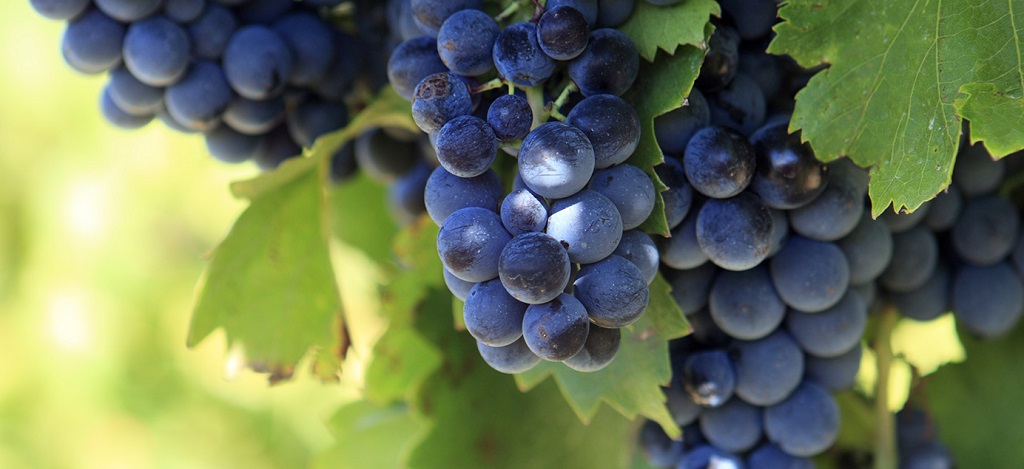
Mourvèdre is a dark skinned red grape variety native to the western Mediterranean. Known for its deep colour, firm tannins, and earthy dark fruit profile, it produces powerful wines that excel in warm climates. Mourvèdre is essential to many southern French and Spanish blends and has also become a key player in Australia and California.
Mourvèdre likely originated in Spain where it is known as Monastrell and has been cultivated since antiquity. It spread to southern France during the Middle Ages and became prominent in the coastal regions of Provence and the Languedoc. In the nineteenth century, it was widely planted across France until phylloxera and changing viticultural preferences led to its decline. It remained an important grape in Spain, especially in regions such as Jumilla and Yecla. In the late twentieth century, Mourvèdre gained renewed interest due to its contribution to the red blends of Bandol in Provence and to GSM blends in the southern Rhône. It later found a home in the New World where it thrives in similarly dry and sunny conditions.
DNA testing confirms that Mourvèdre and Monastrell are genetically identical, though the names reflect different regional traditions. The name Mourvèdre is used in France and many English speaking countries, while Monastrell is preferred in Spain. In Australia and parts of California, the grape is often referred to as Mataro, an older synonym. The grape is believed to be native to Spain and may be related to ancient varieties from the Valencia region. Despite the various names, the wine styles and viticultural traits are consistent across regions, though expressions vary by climate and winemaking approach.
Mourvèdre is a late budding and late ripening variety that needs abundant sunlight and heat to ripen fully. It thrives in dry Mediterranean climates and performs best in well drained, rocky or sandy soils. The vine is vigorous but sensitive to wind and disease and can suffer from coulure and millerandage if weather conditions are poor during flowering. Its thick skins contribute to high colour and tannin, while its compact bunches make it susceptible to rot in humid environments. In ideal conditions, Mourvèdre yields concentrated, structured fruit with good ageing potential.
Mourvèdre is typically vinified with extended maceration to extract deep colour and tannin. It is often aged in oak barrels to help soften its robust structure and develop aromatic complexity. In warmer climates, full ripeness reduces green or gamey notes and brings out richer fruit and spice. In blends, Mourvèdre contributes backbone, depth, and earthy character, especially when used alongside Grenache and Syrah. In varietal bottlings, careful tannin management and ageing are essential to avoid rusticity. Fermentation temperatures tend to be moderate to high and malolactic fermentation is standard. In some regions, whole bunch fermentation is used to bring aromatic lift.
Mourvèdre produces full bodied red wines with dark colour, firm tannins, and medium to high acidity. Aromas typically include blackberry, black plum, black pepper, dried herbs, leather, and cured meat. In its youth, the wine can be brooding and muscular, but with age it gains complexity and savoury depth. In blends, Mourvèdre adds structure and earthiness to rounder or more aromatic grapes. In Bandol, it yields ageworthy wines with notes of black olive, garrigue, and wild game. In Spain, Monastrell is often juicier and more fruit driven, while Australian versions are bold and sun ripened with smoky spice.
Mourvèdre has seen a resurgence in both traditional and New World regions. In France, producers in Bandol continue to refine single varietal expressions while southern Rhône winemakers highlight its role in GSM blends. In Spain, Monastrell is gaining international recognition, especially from old vine plantings in Jumilla that offer power at accessible prices. In Australia, winemakers are embracing Mourvèdre in both traditional and natural styles. California producers in Paso Robles and Contra Costa County are exploring its potential for structured yet expressive wines. Across regions, there is a growing focus on lower alcohol, fresher expressions and more site driven approaches.
In Bandol, Château de Pibarnon and Domaine Tempier produce benchmark Mourvèdre with ageing potential and Mediterranean fragrance. In Spain, Bodegas Juan Gil and Casa Castillo offer bold Monastrell from old vines on rocky soils. In Australia, Hewitson and d’Arenberg make richer versions (under the name Mataro) with black fruit and earth. In California, Tablas Creek and Ridge Vineyards show the grape’s capacity for balance and elegance in Rhône inspired blends. These producers reflect Mourvèdre’s adaptability and its deep connection to place.